Walking the Ancient Road to Santiago: A Deep Guide to the Camino Francés
For nearly a thousand years, pilgrims have followed the Camino Francés across northern Spain toward the tomb of the Apostle James in Santiago de Compostela, turning a simple path into one of Europe’s great cultural arteries. Today this 760–790 km route from Saint‑Jean‑Pied‑de‑Port to Santiago is both a UNESCO World Heritage pilgrimage corridor and a living, evolving trail where Romanesque churches, wine country, and quiet meseta plains share equal billing with sore feet and dorm‑room camaraderie.
This itinerary treats the Camino Francés as a sequence of heritage‑rich regions rather than a rigid “Day 1, Day 2” schedule, so you can walk a full month, a single week, or just the final 100 km while still understanding the deeper story written into its villages, cathedrals, and rituals.
Table of Contents
1. Flight & Accommodation Strategy
The “classic” Camino Francés begins in Saint‑Jean‑Pied‑de‑Port (SJPdP) on the French side of the Pyrenees and then crosses into Spain toward Roncesvalles and Pamplona. The most convenient gateway airport is Biarritz (BIQ), about 50–55 km away; from Biarritz you can continue by shuttle, shared taxi, or train via Bayonne to reach SJPdP in roughly 45 minutes to a few hours depending on connections. Alternative approaches route through Paris or Madrid, then onward to Biarritz, Pamplona, or other northern Spanish cities before a final bus or train to your chosen starting point.
If you don’t have a month to walk nearly 800 km, popular “partial starts” include León, Astorga, Ponferrada, or Sarria, with the last 100+ km from Sarria to Santiago being the minimum many pilgrims choose to qualify for the Compostela certificate.
On the trail, accommodation falls into three main categories:
● Municipal and parochial albergues: Basic pilgrim hostels run by towns or churches, often 10–15 EUR per night in shared dorms.
● Private albergues: Slightly pricier (15–20 EUR), often with smaller dorms or extra comforts.
● Pensiones, guesthouses, and hotels: Private rooms ranging from simple inns to boutique hotels, usually 25–40+ EUR per person depending on sharing and season.
Most walkers mix these options, booking ahead in busier sections (especially the last 100 km in Galicia) and shoulder seasons, and relying more on walk‑in stays in quieter stretches.
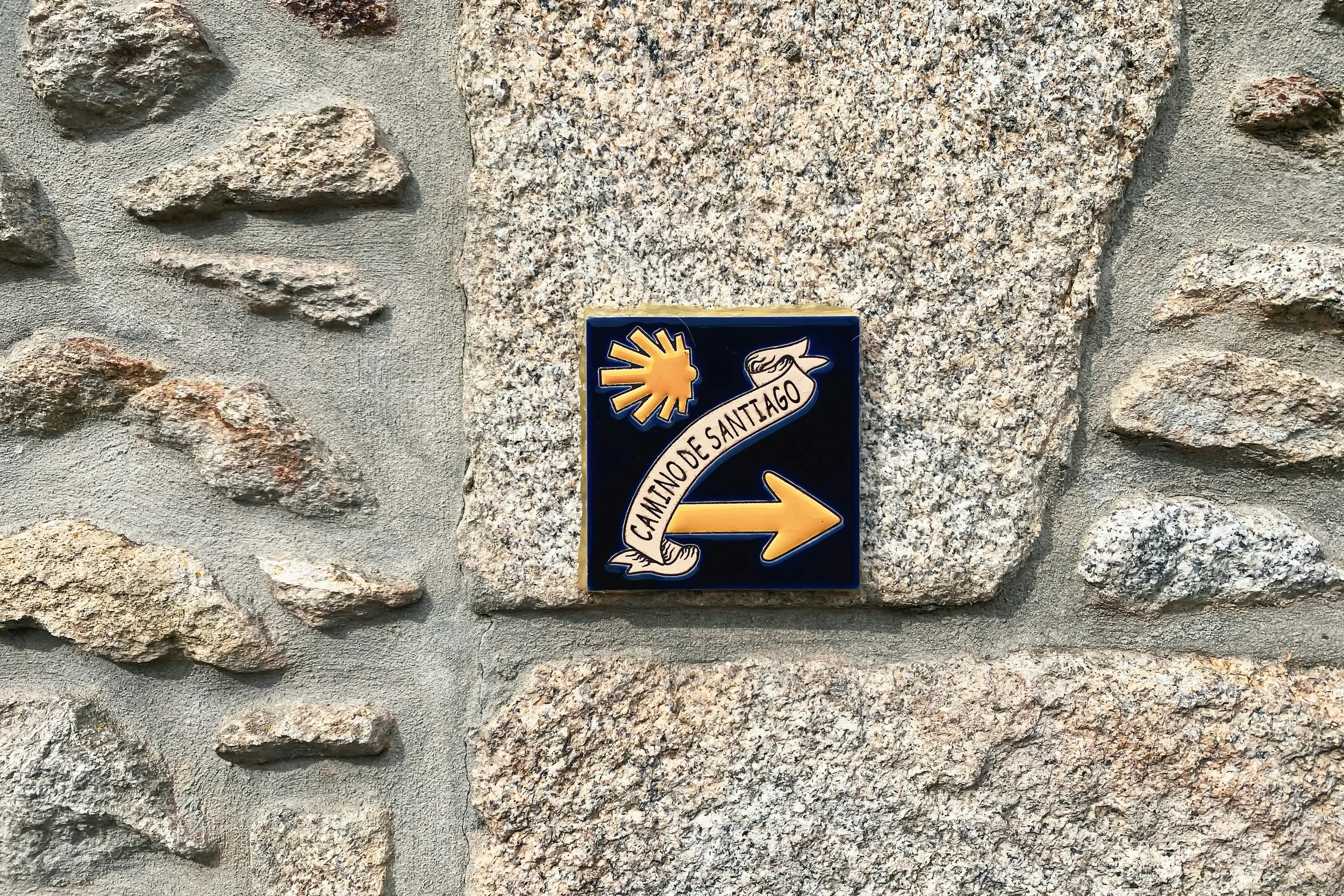
2. Hub One: Over the Pyrenees – Saint‑Jean‑Pied‑de‑Port to Pamplona
This opening hub carries you from the cobbled streets of Saint‑Jean‑Pied‑de‑Port over the Pyrenees to the medieval city of Pamplona, and it condenses the Camino’s essence into just a few days: physical challenge, abrupt weather shifts, monastic hospitality, and your first real taste of pilgrim community.
The traditional first stage from SJPdP to Roncesvalles is one of the route’s toughest, climbing steeply into the mountains before dropping to the old Augustinian monastery where generations of pilgrims have slept in vast dormitories. From there, the way rolls through Basque villages like Zubiri and onwards to Pamplona, where bull‑run streets and Gothic cloisters remind you that this has always been both a market route and a spiritual one.
Micro‑Logistics
● Night 0: Arrive in Saint‑Jean‑Pied‑de‑Port, pick up your pilgrim credencial (passport) if you don’t already have one, and check weather reports for the mountain crossing.
● Stage 1–2: Walk SJPdP → Roncesvalles (either in one demanding day or two shorter days via Orisson if conditions or fitness suggest caution).
● Stage 3–4: Continue via Zubiri and Arre/Villava into Pamplona, where you can take a rest day to explore its citadel, cathedral, and historic streets.
Curator’s Tip / Insider’s Secret
● Mountain weather changes rapidly; local authorities sometimes close the high Napoleon route in poor conditions and divert pilgrims to the lower Valcarlos road—always respect these advisories.
● In Pamplona, step into the cathedral cloister late afternoon when most day‑trippers have gone; the stillness contrasts sharply with the city’s fiesta image and reconnects you to the Camino’s quieter medieval core.
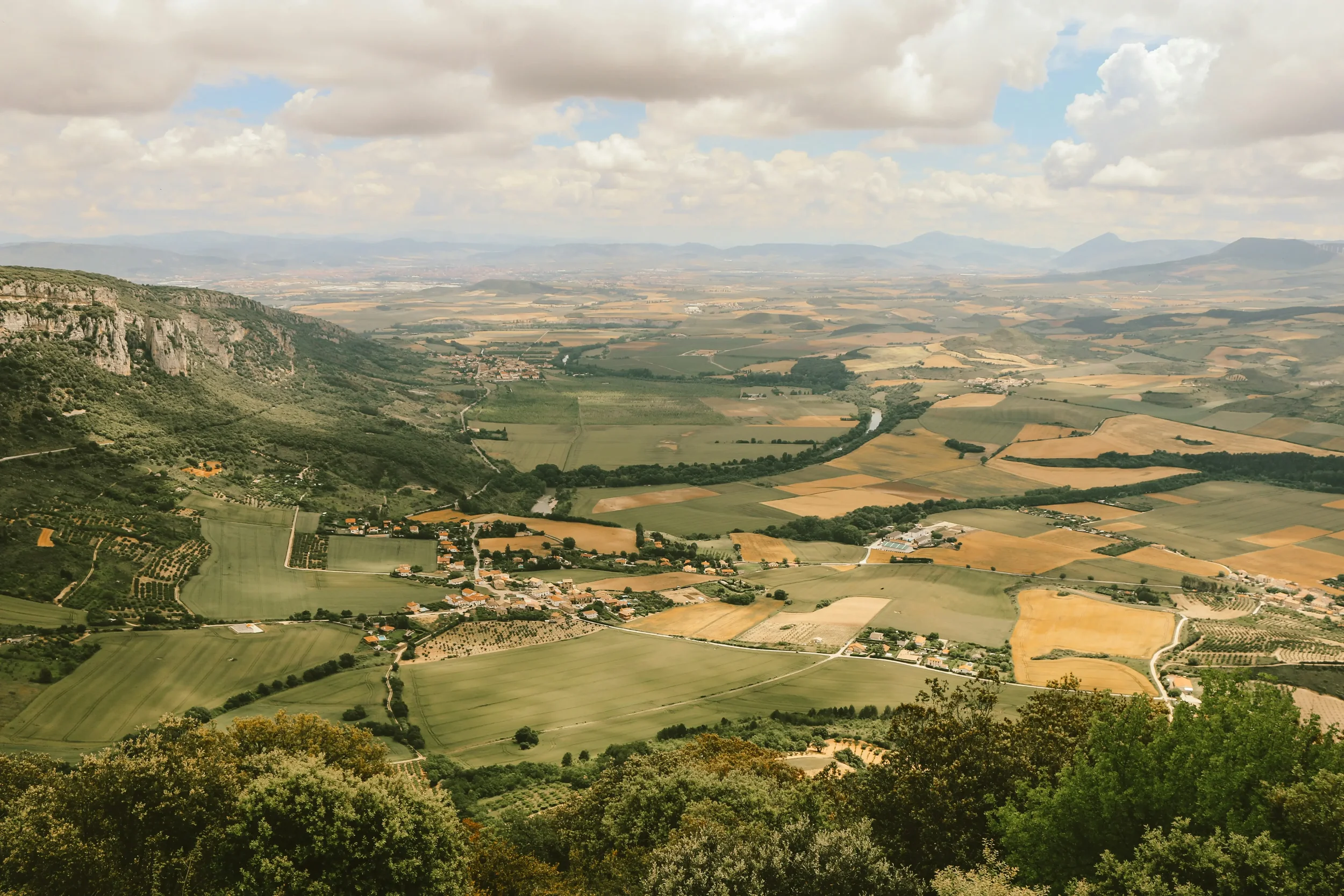
3. Hub Two: Wine, Stone, and Story – La Rioja to Burgos
Leaving Pamplona, the Camino swings through the vineyards of La Rioja and onward to the great cathedral city of Burgos, threading a corridor lined with Romanesque bridges, Gothic spires, and centuries‑old pilgrim infrastructure.
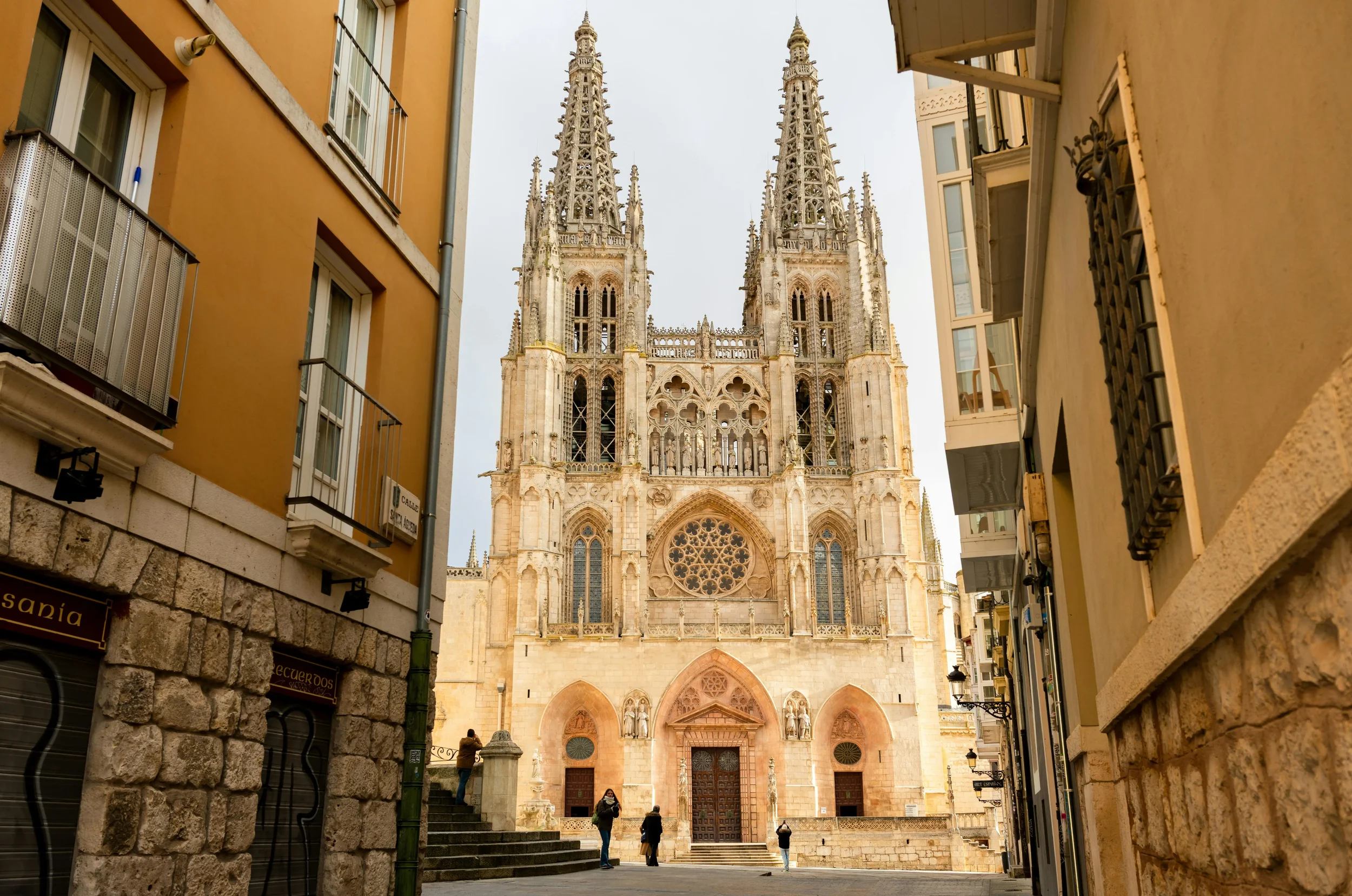
Between Pamplona and Logroño, you crest the iconic Alto del Perdón with its modern steel sculpture of pilgrims, then walk into the heart of Rioja wine country where villages like Puente la Reina, Estella, and Nájera mix agricultural life with deep medieval roots. Beyond Logroño, the path leads to Santo Domingo de la Calzada—famous for its miracle of the hen and rooster in the cathedral—and finally into Burgos, whose UNESCO‑listed Gothic cathedral dominates the old town.
Micro‑Logistics
● Use Logroño or nearby towns as a base to enjoy Rioja’s food and wine culture while still keeping daily stages reasonable.
● Plan at least one unhurried afternoon in Santo Domingo de la Calzada to visit the cathedral and absorb how legend and infrastructure intertwine on the Camino.
● Allow a full or half rest‑day in Burgos to explore the cathedral, riverfront, and Museum of Human Evolution before facing the psychological test of the meseta.
Curator’s Tip / Insider’s Secret
● In Logroño, the Calle Laurel tapas crawl is not just nightlife—it’s a living continuation of Camino conviviality; go early evening on a weeknight to share counters mostly with locals and fellow walkers.
● In Burgos, walk the riverside promenade after dark; the cathedral’s floodlit facade and the reflections in the Arlanzón make it easier to imagine what a medieval pilgrim might have seen approaching the city by lantern light.
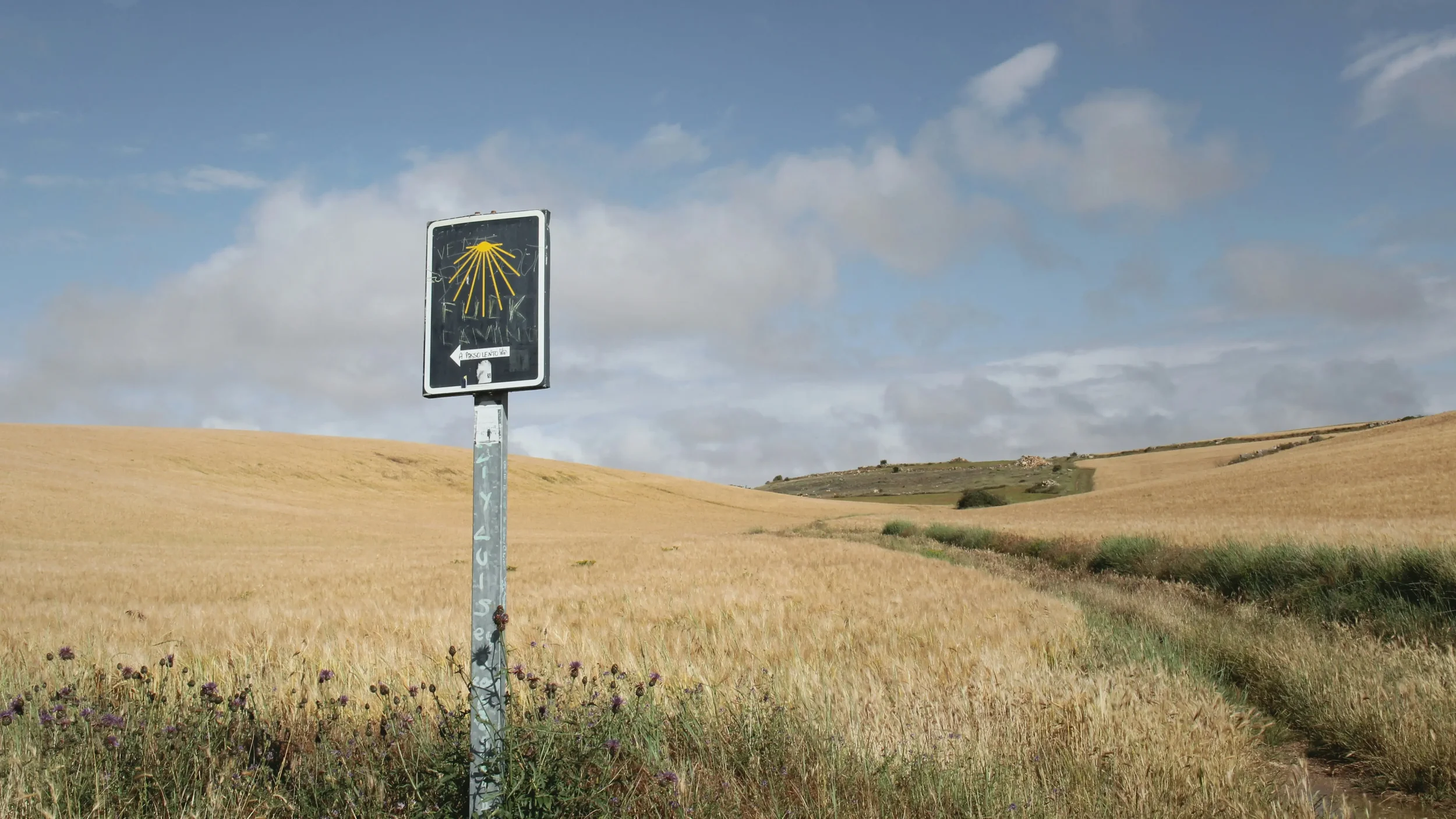
4. Hub Three: The Great Meseta and the City of León
From Burgos to León, the Camino traverses the Castilian meseta, a high plateau of wide skies, cereal fields, and long straight tracks where villages appear like islands on the horizon. For many pilgrims this is the route’s most contemplative stretch: less obviously “dramatic” than the mountains, but rich in monastic history and quiet, workaday towns.
The way runs through places like Frómista, with its pure Romanesque church, Carrión de los Condes, and Sahagún, a historic frontier between old kingdoms, before reaching León, another major Gothic cathedral city with layers of Roman, medieval, and modern life.
Micro‑Logistics
● Break up the meseta with shorter days when heat or wind is strong; typical stages of 20–25 km are only “average” suggestions, not obligations.
● Use mid‑sized towns such as Carrión de los Condes or Sahagún as strategic overnights where you can choose between basic albergues and more comfortable pensiones.
● In León, consider a rest day to visit the stained‑glass‑filled cathedral, the Romanesque Basílica de San Isidoro, and Gaudí’s Casa Botines, which together show how the Camino has carried art and ideas across centuries.
Curator’s Tip / Insider’s Secret
● On the meseta, start walking before dawn on hot days; watching sunrise from the track while villages still sleep is one of the Camino’s quietly unforgettable experiences.
● In León, step into the cathedral just as the sun climbs high—its enormous stained‑glass program floods the nave with colored light, underscoring why this route became a showcase for Gothic art.
5. Hub Four: Into Green Galicia and Arrival in Santiago
West of Astorga, the Camino climbs again toward Cruz de Ferro, the iron cross where pilgrims traditionally leave a stone from home, then snakes through mountain towns like Ponferrada and the Celtic‑flavored village of O Cebreiro before entering the green hills of Galicia. From there, a dense network of hamlets, farms, and eucalyptus groves leads through Sarria, Portomarín, Palas de Rei, Melide, and Arzúa toward Santiago.
The final 100+ km from Sarria to Santiago are the busiest section, as many time‑constrained pilgrims start here to qualify for the Compostela; current rules require at least 100 km on a recognized route, with two daily stamps in your credencial if you’re only doing this minimum and walking the last stage into Santiago itself. The approach to the cathedral square is both an ending and an opening: the journey finishes, but the tradition of arrival, embrace of the Apostle’s statue, and quiet time in the crypt links you directly to centuries of predecessors.
Micro‑Logistics
● Use Ponferrada or Villafranca del Bierzo as gateways to the Galician climb, then pause in O Cebreiro to absorb its stone pallozas and mist‑shrouded setting.
● From Sarria, plan 4–7 walking days to Santiago depending on pace; this section has dense infrastructure but also heavier competition for beds in peak season, so advance booking is wise.
● Aim to reach Monte do Gozo (the “Mount of Joy”) early enough on your final day to pause at the hilltop viewpoints before the last descent into the city.
Curator’s Tip / Insider’s Secret
● In Galicia, fog and drizzle are common; accept them as part of the region’s character rather than “bad weather”—the low clouds, church bells, and farm smells are precisely what give this final stretch its emotional texture.
● Once in Santiago, don’t rush out immediately after picking up your Compostela; attend a pilgrim Mass if possible and spend time wandering the old town’s cloisters and arcades—you’ve joined a story that is bigger than any single arrival photo.
6. The Culinary Soul and Pilgrim Rituals
Food on the Camino is about fuel, fellowship, and regional identity more than fine dining, but each region adds its own signature to the plate. Throughout the route you’ll see the menú del peregrino (pilgrim menu)—a simple three‑course meal plus wine or water, usually priced around 10–15 EUR depending on location and inflation.
What to Seek Out Along the Way
● Navarra & La Rioja
Expect hearty stews, peppers, and Rioja wines; in towns like Logroño, hopping between tapas bars in the evening is practically a secular liturgy.
● Castile and León
Portions grow larger and meatier: chorizo, roast lamb, and cocidos appear more often, reflecting the meseta’s agricultural backbone.
● Galicia
Here the Camino meets the Atlantic; pulpo a la gallega (octopus with paprika and olive oil), empanadas, and ribeiro or albariño wines become common, especially in Melide and Santiago.
Rituals Worth Embracing
● Café con leche and tostada at bar counters: Stand with locals rather than sitting at a table—cheaper, quicker, and more social.
● Shared kitchen dinners in albergues: Buying simple groceries and cooking communally is both budget‑friendly and one of the easiest ways to build Camino friendships.
● Pilgrim menu timing: These menus often start later than many non‑Spanish visitors expect; adjust your rhythm toward Spanish dining hours rather than hunting for dinner at 6 p.m.
7. Essential Wisdom / Survival Guide
Credencial, Stamps, and the Compostela
Your credencial (pilgrim passport) is both a souvenir and a functional tool: you’ll need it to stay in municipal albergues and to prove your journey when claiming the Compostela. You can obtain a credencial from Camino associations in your home country, at many churches and pilgrim offices along the route, or at start points such as SJPdP and Sarria.
As of recent updates, to qualify for the Compostela certificate you must walk at least 100 km on a recognized Camino route (or cycle 200 km), ensure that at least 70 km of that distance is in Spain, walk the final stage into Santiago, and collect two stamps per day if you’re only doing the minimum distance.
Albergue Etiquette
Albergues are communal spaces, and a few unwritten rules make them livable:
● Respect quiet hours, usually around 22:00–06:00—prepare your pack the night before and leave the dorm promptly in the morning.
● Use headlamps or phone lights sparingly and never shine them into others’ faces; outlets are limited, so share chargers and consider carrying a small power bank.
● Help keep kitchens, bathrooms, and drying areas tidy; dozens of tired people sharing one space only works when everyone behaves more like a guest than a customer.
Seasons, Weather, and Gear
Most walkers choose April–June or September–October for reasonable temperatures and open albergues, though peak July–August can be hot and crowded, and winter brings closures and challenging conditions in high sections. Good footwear with broken‑in soles, a rainproof shell, and a layered clothing system will matter more than brand names; pack for thermal range and rain, not for fashion.
8. The Budget Guide
Costs on the Camino Francés can be surprisingly flexible: with discipline, some pilgrims walk for around 25–30 EUR per person per day, while others opt for more comfort in the 35–50+ EUR range or add private rooms and luggage transfer to push budgets higher.
The Backpacker (Budget)
● Typical daily range: about 25–35 EUR per person.
● Sleep: Municipal and parochial albergues (10–15 EUR), occasionally the cheapest private hostels when necessary.
● Eat: Supermarket groceries and self‑cooked meals, with an occasional pilgrim menu or café stop; alcohol kept minimal.
● Do: Focus purely on walking; paid museum or cathedral entries are chosen selectively, and no luggage transfer is used.
The Cultural Explorer (Mid‑Range)
● Typical daily range: approximately 40–60 EUR per person.
● Sleep: Mix of private albergues and small pensiones/guesthouses, sometimes splitting a twin room for more privacy.
● Eat: Regular pilgrim menus (10–15 EUR), café breakfasts, and occasional tapas splurges in cities like Logroño, Burgos, León, or Santiago.
● Do: Occasional guided city or cathedral visits, and possibly luggage transfer on a few strategic days to ease pressure on knees or backs.
The Imperial Experience (Luxury)
● Typical daily range: often 80–130+ EUR per person, depending on room choices and add‑ons.
● Sleep: Boutique hotels, historic paradores, and high‑end guesthouses, often in prime old‑town locations.
● Eat: Restaurant dining most nights, wine tastings in Rioja, and destination meals in larger cities along the route.
● Do: Consistent luggage transfer, occasional private guided tours of major heritage sites, and perhaps rest‑day excursions off the main path.
